
Muffled hearing can affect every facet of your life, leaving you feeling disoriented and isolated from the world around you. It is common to presume that muted sound signifies chronic hearing deficiency, but the problem is often just a treatable earwax blockage.
Understanding the distinction between cerumen blockage vs. hearing loss can help you know when a simple solution is possible and when it’s time to request a hearing assessment. There is no reason to feel overwhelmed if auditory inputs seem dampened. A professional assessment will provide the final answer, but the following guide outlines the primary differences between wax-related issues and permanent loss.
What Earwax Buildup Feels Like
Cerumen (wax) is a normal, protective substance that helps capture dirt and debris and keeps the auditory canal functional. Problems arise when too much wax builds up or turns impacted.
Standard indicators of an obstruction include:
- Dampened sound clarity that occurs over time or suddenly
- The sense that there is a physical obstruction in the ear
- General ear irritation or minor soreness
- Buzzing in the ear (ringing)
- Moments of clearer hearing after a jaw stretch or eating
A signature of wax-induced sound fluctuations is imbalance, usually impacting one side more than the other. Fortunately, extracting the obstruction typically clears the signs instantly.
How Hearing Impairment Usually Manifests
Permanent hearing shifts, often caused by age or loud environments, are gradual and persist even if the ear is perfectly clear.
Standard indicators of permanent auditory loss include:
- Issues with speech intelligibility in busy or noisy locations
- Constantly asking others to repeat themselves
- Setting media levels to a level that people find uncomfortable
- Difficulty hearing high-frequency tones
- Auditory ability uniformly diminished in both ears
Unlike earwax buildup, hearing loss doesn’t typically induce a sensation of blockage or pressure.
Comparing Wax Buildup and Hearing Loss
A few basic signs can help you determine whether you are contending with a manageable blockage or a more lasting change:
- Timeline: Cerumen dampening can be rapid, but permanent loss requires years
- Resolution: Wax-related hearing changes are usually temporary; auditory impairment is often irreversible
- Sensations: Tactile “clogging” leads to wax, while the inability to clarify sounds points to impairment
- Sides: Unilateral muffled sound suggests wax, while bilateral suggests impairment
The Dangers of DIY Cerumen Removal
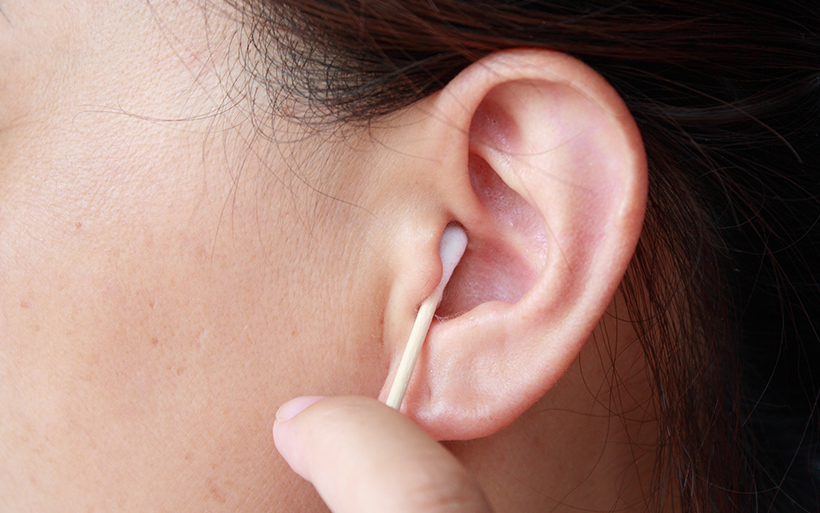
When hearing feels dampened, the natural urge is to use a cotton bud, but this is frequently a dangerous move. In reality, manual probing often compresses the wax further against the tympanic membrane, making the impaction more severe.
Medical research indicates that self-cleaning often results in unintended injury or more difficult-to-treat impactions.
On the flip side, presuming a problem is merely wax when it is actually auditory impairment can hinder you from obtaining the help you require to remain connected.
The Critical Nature of a Clinical Ear Exam
A clinician can use an earlight to instantly see if a physical obstruction is present.
When wax is the issue, clinical irrigation or clinical removal provides immediate resolution.
If no wax is detected, a formal hearing test will be used to map the nature and extent of any hidden impairment.
The National Institute on Deafness and Other Communication Disorders (NIDCD) advises immediate evaluation whenever changes in auditory function conflict with your everyday life.
Determining Cerumen Impaction or Auditory Decline?
Dampened sound is hardly a definitive marker of chronic impairment.
Frequently, the issue is merely a collection of wax that can be easily resolved.
A professional evaluation will provide you with the answers you require to move forward without worry.
Ultimately, an expert exam is the only reliable way to distinguish between a fleeting blockage and a permanent shift.
Locating the cause early protects your health and provides you with the peace of mind you have earned.
If you’ve observed a shift in your hearing, reach out to our office for a professional assessment immediately.