
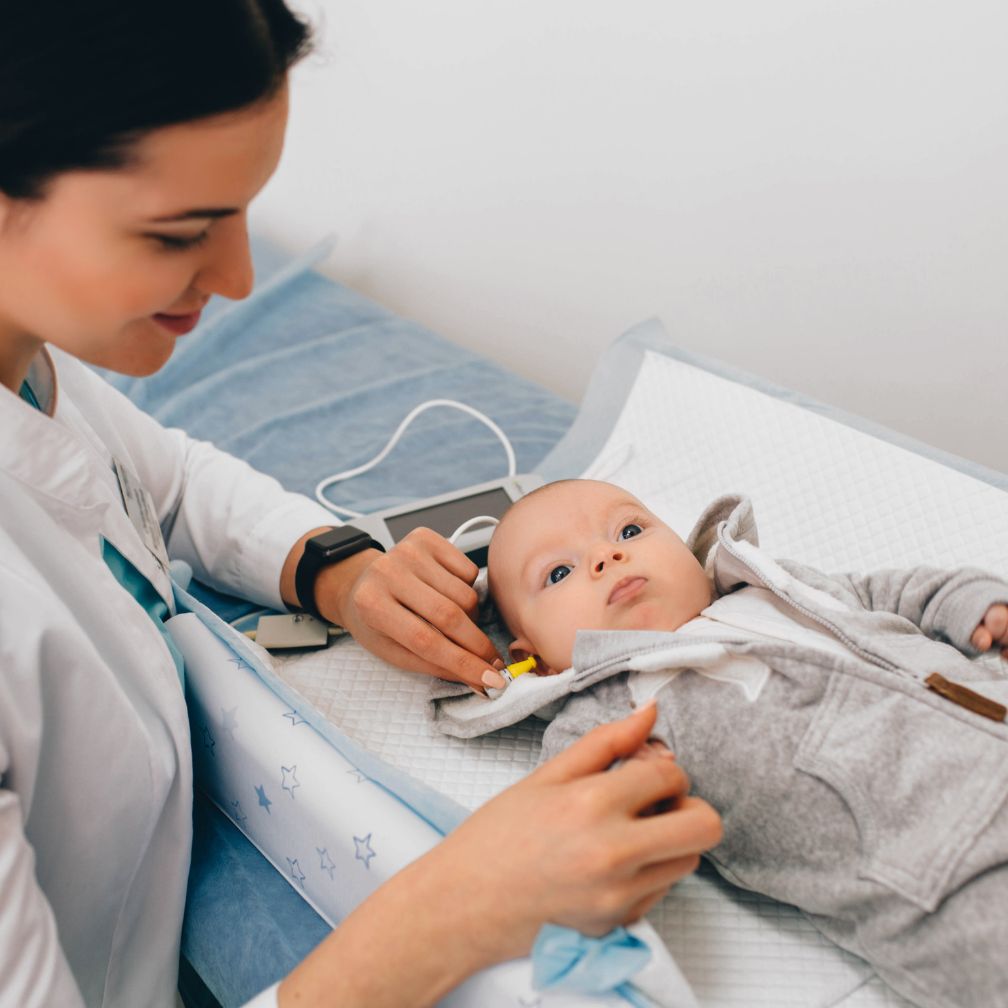
For both parents of a young infant, hearing a medical report of infant hearing loss naturally causes profound stress and concern. Yet the positive perspective remains that via early care and screening, infants experiencing hearing loss can genuinely thrive over time. Indeed, these children can master speech, interactive capabilities, and rich relationships across their environment, resulting in a fulfilling life!
Two of the most effective tools for helping infants with hearing loss are hearing aids and cochlear implants. In the passage below, we evaluate their individual operations and outline how to find the best choice for your infant.
Unpacking the Foundations of Infant Hearing Loss
Hearing impairment across young infants can be driven by several underlying origins, including:
- Spontaneous genetic variations (even within family trees devoid of hearing loss history)
- Perinatal infectious diseases like cytomegalovirus (CMV) or rubella
- Significant obstetric complications, featuring systemic oxygen lack or early gestational delivery
- Selected pharmaceutical treatments deployed inside specialized newborn intensive units
What action holds the highest value? Rapid diagnostic confirmation. As a result, babies across American healthcare facilities undergo hearing evaluations before leaving the care nursery. Pediatric hearing experts follow the “1-3-6” guideline:
- First-stage screening administered before 1 month of life
- Complete clinical diagnosis secured prior to 3 months
- Direct clinical management (utilizing hearing tools or specialized rehabilitation) started before 6 months of age
Reaching these structural checkpoints provides infants their highest potential for speech acquisition, language mastery, and brain development. Whenever you seek direction on these auditory tests, your family pediatrician will gladly help!
Hearing Aids for Infants
For young children demonstrating mild to severe hearing challenges, custom hearing aids usually act as the frontline remedy. These compact, external instruments boost ambient audio signals, allowing infants to hear human speech and background noise much more clearly.
Pediatric-grade hearing devices prove to be:
- Fully safe and comfortable for young infants a few weeks post-birth
- Designed with soft, skin-friendly ear inserts that adjust as the child grows
- Outfitted with secure battery housing closures and specialized pediatric safety components
- Individually configured by a pediatric hearing professional to align with your baby’s exact hearing needs
While your child matures, these hearing aids demand periodic adjustments to ensure snug placement and optimal performance.
Advanced Surgical Solutions: Infant Cochlear Implants
When a baby presents with severe to profound sensorineural hearing loss that receives minimal benefit from traditional hearing aids, specialists routinely suggest a cochlear implant. In contrast to conventional amplification tools, advanced cochlear implants:
- Entail precision surgical insertion inside the inner ear delivering direct electrical signals to the brain
- Safely bypass damaged sensory cells inside the cochlea
- Transform ambient sound into direct electrical pulses that stimulate the auditory nerve directly
Specialized pediatric cochlear implants act as:
- Formally FDA-cleared for infants starting at 9 to 12 months of age
- Deeply effective when supported through early developmental habilitation and enthusiastic family care
- Sanctioned strictly following a complete diagnostic battery by a certified audiologist and otolaryngologist
Such a comprehensive process requires neuroimaging scans, detailed hearing tests, and setting realistic expectations for future communicative success.
Comparing Hearing Aids and Cochlear Implants: Key Differences
- Mild to severe hearing challenges suit Hearing Aids; Severe to profound hearing loss requires Cochlear Implants
- Non-Invasive external fitting: Hearing Aids; Surgical internal implantation: Cochlear Implants
- Traditional acoustic amplification: Hearing Aids; Converts Sound Electrical Signals: Cochlear Implants
- Intervention starts in early infancy: Hearing Aids; Procedure starts at 9-12 months: Cochlear Implants
Final Takeaways: Navigating Infant Hearing Solutions
If your newborn faces a confirmed hearing impairment diagnosis, remember that proven treatment choices and dedicated expert support. Thanks to collaboration with dedicated pediatric audiologists, many young children achieve language development completely comparable to their healthy peers.
Irrespective of whether your child receives fitting for hearing aids or surgery for cochlear devices, prompt intervention produces a lifelong positive impact.
Are you looking for clarity regarding your infant’s hearing development? Connect with our office today for a complete diagnostic review and tailor-made care roadmap.