
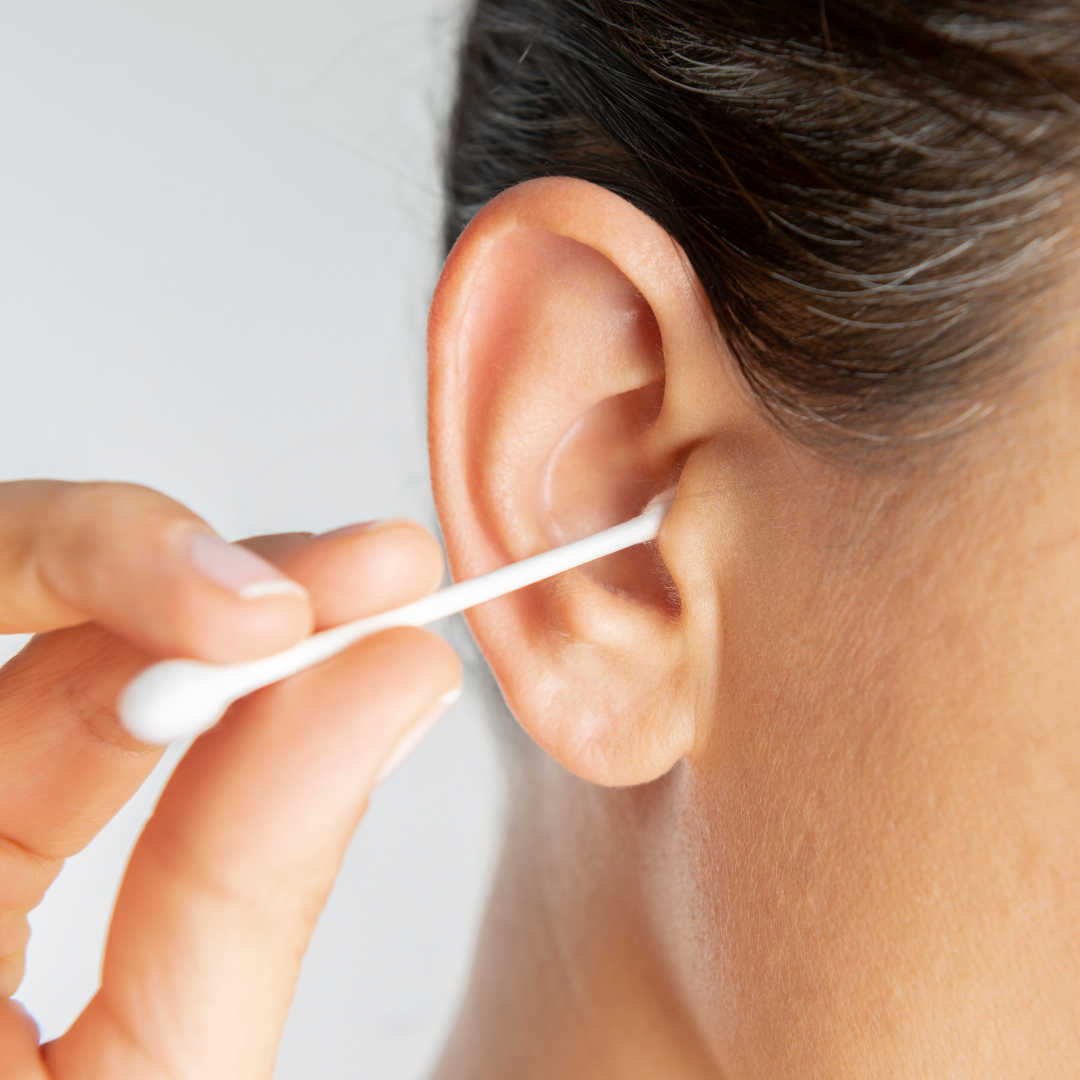
Although cotton swabs appear to offer an easy hygiene solution, pushing them into the ear canal often worsens wax accumulation and risks tissue trauma. We perform thorough examinations to verify if earwax removal is necessary and select appropriate procedures for your ear condition. Ear canals typically maintain themselves without assistance; nonetheless, if stubborn buildup develops, we help individuals safely eliminate excess wax.
Understanding the Risks of Using Q-Tips in the Ear
Earwax, or cerumen, is not dirt. It traps dust and debris, helps limit bacterial growth, lubricates the ear canal, and protects its sensitive skin. Routine chewing and epithelial cell migration continuously transport spent wax toward the concha, where it falls out or clears during bathing.
A Q-Tip placed inside the canal can disrupt this self-cleaning process. Although the cotton may collect a small amount of wax, it often pushes the remaining material closer to the eardrum. Repeated use can pack wax into a firm blockage and create the plugged sensation that encourages even more cleaning.
You may gently utilize cotton swabs across the external auricle, but you should avoid inserting them into the internal canal.
Types of Ear Injuries Caused by Cotton Swabs
The delicate dermal lining of the auditory canal is remarkably thin and susceptible to lacerations. Minor scratches can trigger localized pain, bleeding, and bacterial infiltration, substantially elevating the risk of otitis externa. Furthermore, the cotton fibers may separate from the stick, leaving a foreign body lodged within the canal.
Documented injuries associated with cotton swabs include:
- Deep mechanical cerumen impaction
- Cutaneous tearing, swelling, canal inflammation, or bleeding
- Secondary bacterial otitis externa
- Cotton swab fragments trapped inside the auditory canal
- Ruptured, torn, or perforated tympanic membrane
- Mechanical trauma to the middle-ear ossicles behind the eardrum
- Temporary conductive loss or permanent auditory changes
- Persistent tinnitus, balance instability, or severe otalgia
Serious injuries are uncommon, but they can happen if someone bumps the user’s arm, the swab slips, or it is inserted too far.
How Often Should Earwax Get Removed?
Most healthy adults have no clinical need to extract earwax on a set timetable. Physiologically stable ears continuously migrate wax outward, while standard showering takes care of the visible ear. Overzealous hygiene parches canal tissue, incites chronic irritation, and increases vulnerability to bacterial infection or deep plugs.
Intervention becomes necessary whenever wax creates an anatomical blockage, obstructs otoscopic examination, disrupts hearing aid operation, or causes aural distress.
Safe Protocols for Managing Cerumen at Home
If earwax is not causing symptoms, leaving it alone is usually the safest option. Simply cleanse the external ear using a damp, gentle washcloth, allowing the internal canal to clear independently.
Should cerumen require breakdown, our team may recommend commercial cerumen-removal drops or formulas featuring saline, mineral oil, glycerin, or carbamide peroxide. Use only the labeled amount and for the labeled duration. Stop treatment promptly if the drops elicit sharp pain, noticeable dizziness, allergic rash, or worsening hearing complaints.
Performing irrigation at home is unsafe for certain individuals and must only proceed after a clinician verifies ear safety and explains the protocol. Never use a dental water jet. Do not use dangerous devices like ear candles, metal scrapers, endoscopic camera tools, hairpins, or unverified suction units. These dangerous tools carry severe risks of burning skin, lacerating canal tissue, puncturing the tympanic membrane, or packing wax inward.
Recognizing When Earwax Requires Clinical Intervention
Schedule a professional visit if the canal remains occluded after softening treatments, cerumen appears deeply lodged, or home remedies fail. Expert removal is the safest path for patients who struggle to hold still, individuals with narrow ear canals, hearing aid wearers, or those with surgical contraindications to irrigation.
You should seek professional assessment for:
- Severe ear pain, intractable itching, or outer ear tenderness
- Hemorrhagic discharge, purulent fluid, clear otorrhea, or foul-smelling drainage
- Pyrexia or localized tissue swelling surrounding the ear canal
- Sudden-onset tinnitus or vestibular dizziness
- Hearing loss that starts abruptly or fails to resolve following wax removal
- A suspected perforated eardrum or retained cotton tip
- Repeated wax accumulation that impairs prescription hearing devices
A sudden reduction in one ear’s hearing demands emergency evaluation rather than an assumption of wax blockage. Immediate assessment allows clinicians to differentiate an external canal obstruction from an urgent inner-ear pathology.
How Can a Doctor Remove Excess Earwax?
We first examine the canal with an otoscope or microscope to confirm that wax is present and look for infection, injury, or an eardrum perforation. The ideal extraction strategy is dictated by the consistency of the wax, ear canal dimensions, clinical background, past ear procedures, and patient physical stability.
Professional options include:
- Medical-grade wax softeners administered prior to or during the procedure
- Controlled ear flushing using warm, body-temperature water on intact eardrums
- Controlled vacuum micro-suction under continuous visual monitoring
- Manual instrument removal utilizing specialized curettes, loops, or micro-forceps
Direct illumination and magnification enable the provider to spare sensitive canal skin and stop promptly upon patient feedback. Combining multiple extraction techniques is sometimes required for stubborn, dehydrated, or densely consolidated cerumen. After clearance, we conduct a follow-up visualization to ensure the canal walls and tympanic membrane show no complications. If fullness, tinnitus, dizziness, or hearing difficulty continues, additional testing can identify another cause.
Book a Professional Earwax Evaluation and Removal
If you notice a blocked sensation or changes in auditory clarity, contact us for an evaluation rather than inserting a Q-Tip. Your appointment can include a review of symptoms, previous ear procedures, hearing aid use, home treatments, and factors that may increase wax buildup. Contact us to request an earwax-removal appointment.